
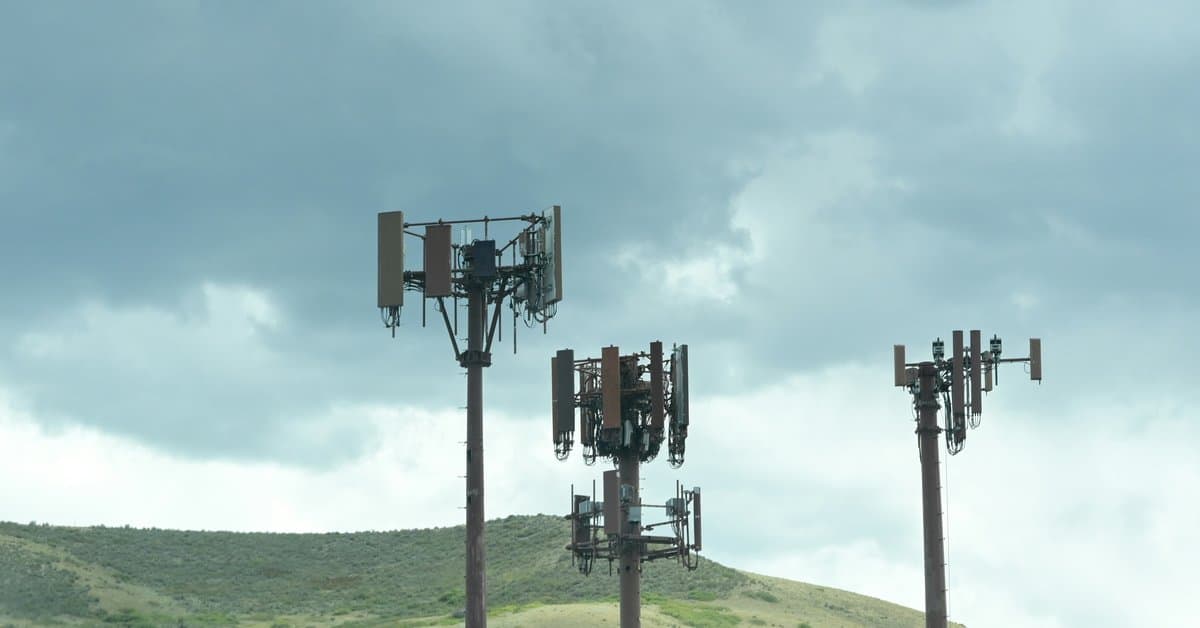
Every DFW office building has that one conference room where cell signal disappears the moment the door closes. Thick concrete, low-E glass, and metal decking all block cellular signal from reaching deep into modern commercial construction. DAS cabling DFW buildings increasingly need is the fix. It depends entirely on structured cabling infrastructure most building owners never think about until the dead zones become a daily complaint.
This guide covers what a Distributed Antenna System actually is. It also covers why the cabling behind it matters more than the antennas themselves, and when a DFW building actually needs one.
What DAS Cabling DFW Buildings Rely On Actually Does
DAS cabling DFW buildings rely on starts with a simple concept. A Distributed Antenna System takes a cellular signal and distributes it through small antennas placed throughout a building. The source can be an outdoor donor antenna or a dedicated carrier connection. Instead of one weak signal trying to penetrate an entire structure, dozens of small antennas each cover a limited zone. Every zone gets strong, consistent signal instead.
However, the antennas themselves get most of the attention in DAS conversations. The cabling connecting them is what actually makes the system work. Fiber optic cabling typically carries the signal from the head-end equipment to remote units. Coaxial or Cat6A runs complete the connection to each antenna. Get that cabling wrong, and even expensive DAS equipment underperforms.
Why Modern DFW Buildings Need DAS More Than Older Ones Did
Older commercial buildings often had cellular signal problems too. However, the problem has gotten worse, not better, which is exactly why DAS cabling DFW buildings need has become so common. Low-E glass is now standard in new DFW construction for energy efficiency. It reflects cellular signal almost as effectively as it reflects heat. Metal stud framing and concrete floors compound the problem in multi-story buildings.
Meanwhile, expectations have changed significantly. A tenant who can’t get cell signal in a leased office space treats it as a serious deficiency, not a minor inconvenience. For multi-tenant office buildings, hospitals, and large corporate campuses across DFW, DAS has moved from a nice-to-have to an expected building amenity.
Public Safety DAS Is Often a Code Requirement, Not a Choice
Beyond tenant coverage, DAS cabling DFW buildings need often serves a second purpose too. Many DFW municipalities require Emergency Responder Radio Communication Systems as a condition of occupancy. NFPA 72 and the International Fire Code both address in-building radio coverage requirements for first responders. A building that can’t demonstrate adequate radio coverage for fire and police communications may not pass final inspection. This holds true regardless of how good cellular coverage is for tenants.
Consequently, this distinction matters for DFW building owners planning new construction or major renovations. Public safety DAS isn’t optional in many jurisdictions. Cellular DAS for tenant convenience is a business decision instead. The two systems often share the same cabling infrastructure, though, and get designed together.
How DAS Cabling Gets Designed for a DFW Building
Specifically, a proper DAS cabling design starts with a signal survey. This maps actual cellular strength throughout the building before any equipment gets specified. It identifies real dead zones instead of guessing. For DAS cabling DFW projects, fiber backbone then connects the head-end equipment to remote antenna units on each floor. This follows the same pathway planning principles as any structured cabling backbone.
Additionally, coordination with the building’s structured cabling infrastructure matters here. DAS cabling shouldn’t be an afterthought bolted onto an existing network. When it’s planned alongside a building’s primary cabling infrastructure, pathway space, telecom room capacity, and cable management all get accounted for together.
What a Real DFW DAS Project Looks Like
A 12-story office tower in downtown Dallas typically needs a DAS signal survey identifying dead zones on every floor. Fiber backbone connects head-end equipment in the main telecom room to remote units distributed throughout each floor. Public safety DAS gets designed alongside tenant cellular DAS. Both share pathway space and coordinate with the fire alarm system as required by code. The result is consistent cellular coverage throughout the building and a system that passes fire marshal inspection.
Questions to Ask Before You Invest in DAS Cabling DFW Systems
Before specifying a DAS system for your DFW building, get clear answers to these questions:
- Has a signal survey actually identified where the dead zones are, or is this a guess?
- Does your jurisdiction require public safety DAS as a condition of occupancy?
- Is the DAS cabling being designed alongside your building’s structured cabling infrastructure, or as a separate afterthought?
- What fiber backbone and pathway capacity does the design require, and does your telecom room have room for it?
- Who tests and certifies the system once installed, and what documentation do you receive?
The Bottom Line
DAS cabling DFW buildings need is fiber and structured cabling infrastructure first, antenna equipment second. Getting the cabling design right determines whether a DAS system actually solves cellular dead zones. Otherwise, it becomes an expensive system that never quite works as advertised.
Just Cabling designs and installs the fiber optic backbone cabling that DAS systems depend on, coordinated with your building’s broader structured cabling infrastructure. If your DFW building has cellular dead zones or an upcoming public safety compliance deadline, request a free assessment. We’ll survey what your building actually needs.
Just Cabling is a Dallas-based structured cabling company serving businesses across the DFW metroplex, including Plano, Frisco, McKinney, Allen, Las Colinas, and beyond. We specialize in commercial structured cabling, fiber optic installation, and network infrastructure for offices, medical facilities, and corporate campuses.