
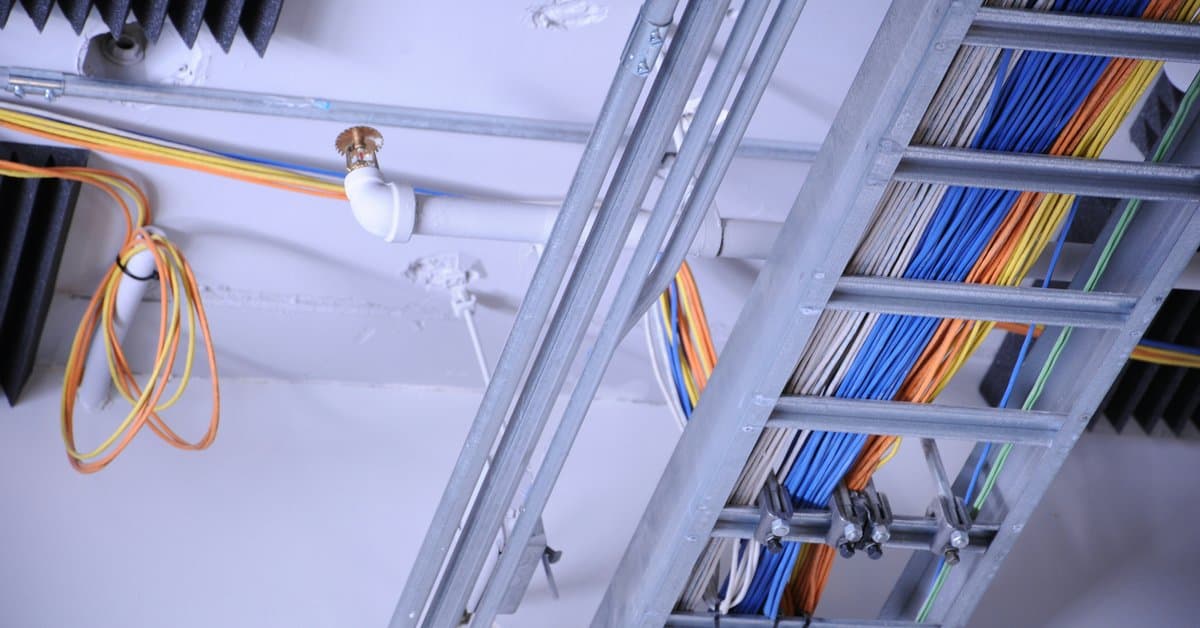
Walk into almost any Dallas commercial building that’s been renovated a few times, and the ceiling tells a story. Bundles of dead Cat5, old coax, and disconnected phone wire sit tangled above the new cabling. Every IT vendor who came before left something behind. Abandoned cable removal Dallas building owners often overlook isn’t just a housekeeping issue. It’s a fire code violation waiting to be discovered at the worst possible time.
This guide covers what counts as abandoned cable under the National Electrical Code. It also covers why it’s a real fire hazard, and what to expect when a cabling contractor removes it as part of your project.
What Counts as Abandoned Cable Removal Dallas Buildings Need to Address
The National Electrical Code defines abandoned cable clearly, which is the starting point for any abandoned cable removal Dallas project. It’s any cabling that isn’t terminated at both ends to equipment, and isn’t tagged for future use. That definition matters. A cable coiled neatly in a closet with a label isn’t abandoned. A cable dangling from a ceiling tile with no connector on either end is. Most Dallas offices have accumulated years of the second kind.
Every abandoned cable removal Dallas project has a similar backstory. Every technology refresh leaves a layer behind. Old phone wiring from a PBX system nobody uses anymore is one example. Cat5e runs replaced by Cat6A but never pulled out are another. Coax from a satellite dish that came down years ago adds to the pile. None of it gets removed, because removing cable isn’t anyone’s job during a typical install. It just accumulates.
Why This Is a Fire Code Issue, Not Just Clutter
First, cable jacketing is not fireproof. In a fire, abandoned cable in a ceiling plenum adds fuel and generates toxic smoke as it burns. This is exactly why NFPA 70, the National Electrical Code, requires its removal. The code isn’t concerned with tidiness. It’s concerned with what happens when a fire spreads through the space above your ceiling tiles.
Abandoned cable removal Dallas contractors handle correctly also protects pathway capacity. Dead cable takes up conduit and cable tray space that new, active cabling needs. In older buildings with limited pathway capacity, that matters as much as the fire code question does.
How Abandoned Cable Gets Discovered
Specifically, most Dallas businesses find out about this problem the hard way. A fire marshal inspection during a tenant improvement project flags it. A new cabling contractor opens a ceiling tile and finds a decade of accumulated wire. An electrical inspector doing unrelated work notices it and writes it up anyway, since code violations don’t go unmentioned once seen.
Instead, the better path is proactive. Any time a new cabling project starts, a site survey should identify what’s already up there before new cable goes in. This turns a surprise compliance problem into a planned, budgeted part of the project instead.
What a Proper Abandoned Cable Removal Project Looks Like
For abandoned cable removal Dallas contractors handle properly, a qualified cabling contractor starts with a site survey. Every run gets traced to confirm whether it’s active, unused, or genuinely abandoned. First, active cable stays. Second, unused-but-labeled cable gets flagged for the client’s decision. Third, genuinely abandoned cable gets documented and removed. Disposal matters too, since copper and jacketing materials have their own recycling requirements.
Additionally, documentation matters here too. A proper removal project produces a report showing what was removed, and from where. That report confirms the space now meets code. It’s exactly what a fire marshal or building inspector wants to see if the question ever comes up again.
What This Looks Like on a Real Dallas Project
A 15-year-old office building in Las Colinas typically has three or four generations of abandoned cable stacked in its ceiling plenum. That’s usually the case by the time a new tenant moves in. A proper cabling project for that space starts with a full pathway survey. It identifies every abandoned run and removes it alongside the new Cat6A installation. The result is a ceiling that’s actually code-compliant, not just newly wired on top of an old problem.
Questions to Ask Before Your Next Cabling Project
Before starting a new cabling installation in a Dallas building with any prior tenants, get clear answers to these questions:
- Will the contractor survey existing pathways for abandoned cable before new cable goes in?
- Does the project scope include abandoned cable removal, or does it stop at installing new runs?
- Will you receive documentation showing what was removed and confirming code compliance?
- How is removed cable disposed of, and does that meet local recycling requirements?
- If abandoned cable is discovered mid-project, how does that affect cost and timeline?
The Bottom Line
Abandoned cable removal Dallas building owners deal with is a real NEC requirement, not an optional cleanup service. Every technology refresh that skips it leaves a fire code liability for the next person to discover. Handling it proactively, as part of a planned cabling project, costs far less than an inspection failure during a tenant improvement.
Just Cabling surveys and removes abandoned cable as part of every structured cabling installation across the DFW metroplex. If your last office move left cable in the ceiling nobody’s accounted for, see our office move cabling checklist. Or request a free assessment and we’ll survey what’s actually up there.
Just Cabling is a Dallas-based structured cabling company serving businesses across the DFW metroplex, including Plano, Frisco, McKinney, Allen, Las Colinas, and beyond. We specialize in commercial structured cabling, fiber optic installation, and network infrastructure for offices, medical facilities, and corporate campuses.