
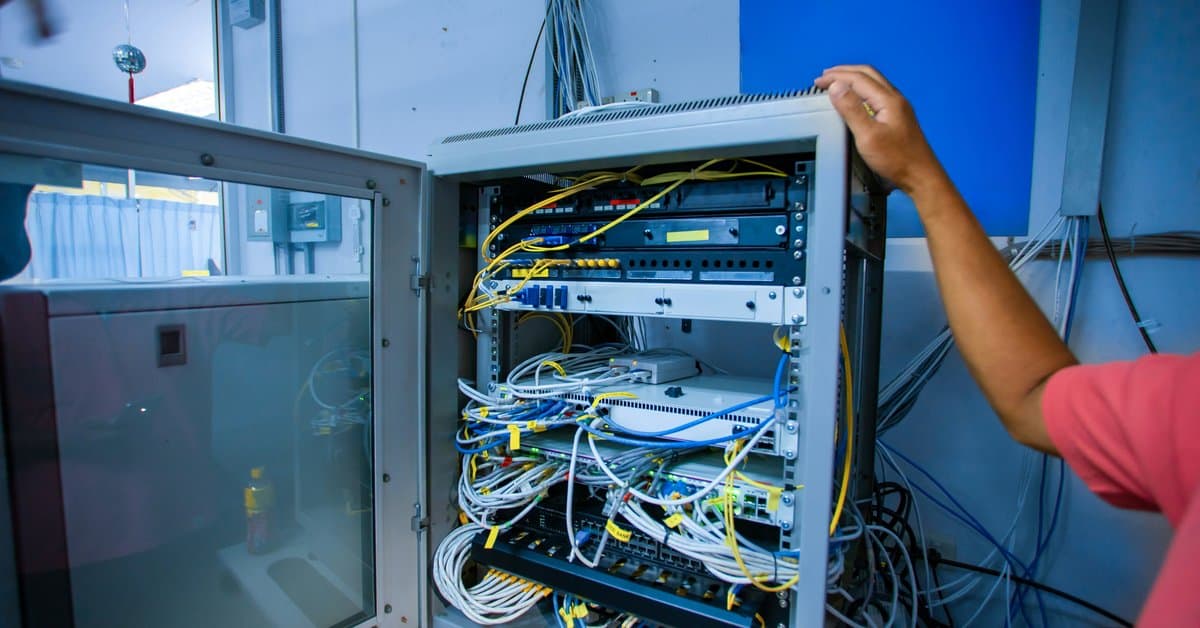
The cabling project doesn’t end when the building opens. Every DFW business that leases office space eventually deals with network cabling MACs Dallas teams handle after the original installation. That means moves, adds, and changes that happen as headcount grows, teams reorganize, or a department relocates within the building. Most businesses don’t budget for this until the first request comes in. That’s exactly when it becomes an unplanned expense.
This guide covers what MAC work actually involves. It covers what it typically costs, too, and how to plan for it before your first move request lands on someone’s desk.
What “Moves, Adds, and Changes” Actually Means
A “move” relocates an existing network drop to serve a workstation in a new spot. An “add” installs a brand-new drop where none existed before, usually because of headcount growth or a new device. A “change” covers everything else. It might mean reconfiguring an existing drop’s connection. It could mean re-terminating a run after damage. Or it could mean modifying a consolidation point to serve a new layout.
None of these are large projects on their own. But over the life of a commercial lease, they add up to a recurring maintenance category. It’s easy to overlook when budgeting for the original build-out.
Why MAC Work Happens More Often Than Businesses Expect
A DFW office that leases for five to ten years will almost certainly go through at least one big reconfiguration. A department grows. A floor plan changes to fit new furniture. Or a tenant improvement gets triggered by a lease renewal. BICSI’s design and installation standards note that businesses running rigid, fixed cabling designs with no consolidation points or spare capacity often hit trouble. Even a minor layout change can require pulling entirely new cable runs, since the original design never planned for flexibility.
Businesses running AI-forward operations, expanding security camera coverage, or adding access control points generate a steady stream of add requests. These never fully stop, since technology deployment in a growing DFW business tends to be continuous rather than a single event.
Spare Capacity Reduces MAC Costs Significantly
A cabling design with some spare conduit capacity cuts costs. So do extra ports on patch panels, and a few unused drops in flexible locations. Together, these dramatically reduce the cost of future MAC work. Panduit’s structured cabling design guidance recommends building this headroom in from the start. Instead of pulling brand-new cable through a finished ceiling for every add request, the work becomes a matter of activating an existing spare port. Contractors who design purely to the minimum required drop count on day one set up every future add request to cost more.
What Drives Network Cabling MACs Dallas Costs
A simple move within the same general area, using existing pathway capacity, costs far less than an add. An add usually requires pulling new cable through a finished ceiling. Distance back to the telecom room matters too. Costs climb further if the work requires accessing a hard ceiling, not a drop tile. They also climb with after-hours access needs in an occupied building. Or if the patch panel at the telecom room already sits at full capacity and needs new hardware before anyone can activate a port.
Businesses that batch MAC requests generally see lower per-request costs. Waiting to accumulate several moves or adds before scheduling a technician visit beats calling for one-off emergency changes every few weeks. A single visit can handle multiple items at once.
Building Network Cabling MAC Support Into Your Dallas Budget
Rather than treating each move or add as a surprise expense, smart DFW businesses plan ahead. Those budgeting for network cabling MACs Dallas providers bill for typically set aside an annual allowance. That allowance should match their expected pace of change. A fast-growing company adding headcount regularly needs more. A stable office with infrequent reconfiguration needs less. Some businesses also negotiate a standing service agreement with their original cabling contractor. This locks in response times and often reduces per-visit costs compared to calling different vendors for each request.
What This Looks Like on a Real DFW Project
Here’s how network cabling MACs Dallas businesses can plan for in practice. A professional services firm in Plano designed its original office cabling with roughly 15 percent spare port capacity at the patch panel. It also included a few unused drops distributed through the open work areas. Over the following three years, the firm added two departments and reorganized its floor plan twice. Because spare capacity already existed, most moves and adds got completed in a single half-day visit each time. Technicians simply activated existing ports rather than pulling new cable. A similar firm down the street built with zero spare capacity. That firm spent far more per change, since nearly every request required a new cable pull from the telecom room.
Network Cabling MACs Dallas: Questions Before You Sign Off on Your Design
- How much spare port capacity is being built into the patch panel, and does it match your realistic growth plans?
- Are any consolidation points or flexible pathway options being designed in to reduce future MAC costs?
- Does your contractor offer a standing service agreement for ongoing moves, adds, and changes?
- What is the typical turnaround time for a MAC request once your lease is underway?
The Bottom Line
Network cabling MACs Dallas businesses face are not a one-time cost. They’re an ongoing category of expense that begins the moment your office opens and continues for the life of your lease. Plan for spare capacity during the original design. Build a relationship with a contractor who can respond fast. Both keep that ongoing cost predictable instead of a recurring surprise.
Our team at Just Cabling designs original installations with realistic growth in mind. We also provide ongoing MAC support for businesses across the DFW metroplex, delivering structured cabling, fiber optic installation, and network infrastructure built to change with your business. Are you planning a new build-out, or do you need support on an existing installation, across Plano, Frisco, McKinney, Allen, Las Colinas, or Irving? We offer free on-site assessments and a written scope before any work begins.
Just Cabling is a Dallas-based structured cabling company serving businesses across the DFW metroplex, including Plano, Frisco, McKinney, Allen, Las Colinas, and beyond. We specialize in commercial structured cabling, fiber optic installation, and network infrastructure for offices, medical facilities, and corporate campuses.