
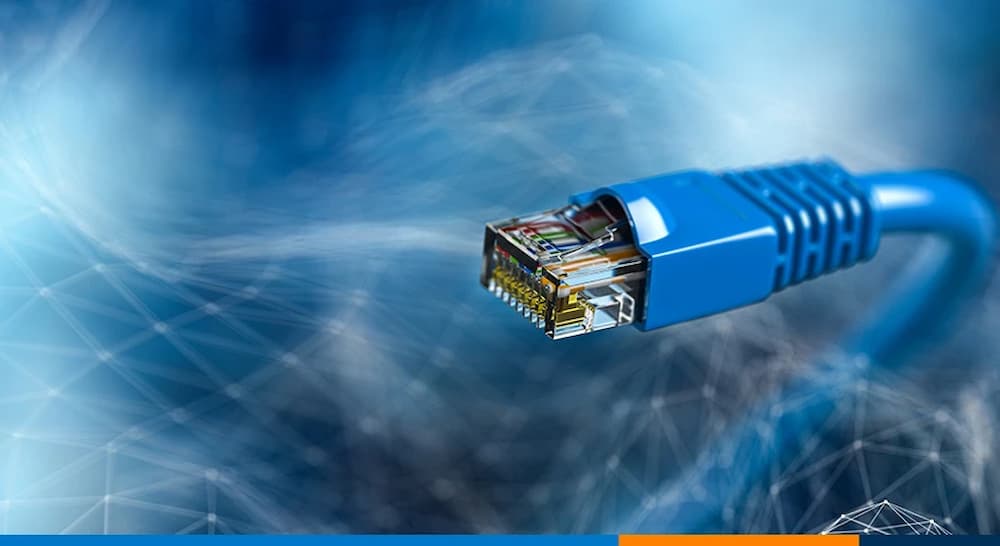
The Cat6 vs Cat7 comparison comes up often for DFW businesses. They are evaluating ethernet cable options for office build-outs, network upgrades, and new commercial construction. Both cable categories offer real performance improvements over older standards. However, they are not equivalent alternatives. Understanding where each one fits — and where Cat7 has a significant limitation for commercial use — prevents costly specification mistakes before installation begins.
This guide covers the key technical differences between Cat6 and Cat7. It also explains how they compare in speed, shielding, and connector types. Additionally, it covers what DFW commercial buyers need to know about the standards landscape before specifying either one.
The Most Important Cat6 vs Cat7 Distinction: Standards Recognition
Before comparing specifications, DFW commercial buyers need one critical fact. Cat7 is not recognized by ANSI/TIA-568 — the commercial building telecommunications cabling standard used throughout the United States.
TIA-568 governs commercial structured cabling design, installation, and testing. It covers DFW offices, data centers, and commercial buildings across the Metroplex. Specifically, it recognizes Cat5e, Cat6, Cat6A, and Cat8. Cat7, by contrast, is a European standard — ISO/IEC 11801 — with different connector requirements. US commercial network engineers rarely specify it.
In practice, this creates real problems. DFW businesses specifying Cat7 face limited availability from US distributors. They also encounter limited installer experience with the required connectors. Furthermore, there is no TIA-568 compliance path for the installation — which matters for warranty claims, building certifications, and future troubleshooting.
Consequently, for most DFW commercial applications that need performance beyond Cat6, Cat6A is the recognized US standard. It delivers 10 Gbps at full 100-meter channel distances, supports high-wattage PoE, and is fully TIA-568 compliant. With that context established, here is how Cat6 and Cat7 compare technically.
Bandwidth and Speed
Cat6 cables support a network bandwidth of up to 250 MHz. They handle speeds up to 1 Gbps reliably over distances up to 100 meters. At shorter distances — up to approximately 55 meters — Cat6 can support 10 Gbps under optimal conditions. However, this is not a guaranteed specification at full channel length.
Cat7 cables increase bandwidth capacity to 600 MHz. They support 10 Gbps at full 100-meter distances. The higher frequency headroom provides better signal integrity under load. Moreover, it helps in high-density environments where multiple cable runs bundle together and alien crosstalk becomes a factor.
For DFW commercial installations requiring 10 Gbps at full distance, Cat6A achieves the same specification as Cat7. Additionally, it carries full TIA-568 recognition and broader installer availability across the Metroplex. Therefore, Cat6A is the practical choice for new office builds, data center interconnects, and wireless infrastructure backhaul.
Shielding and Crosstalk Protection
Shielding is one of the most significant technical differences in the Cat6 vs Cat7 comparison. Cat6 cables come in both UTP (Unshielded Twisted Pair) and STP (Shielded Twisted Pair) configurations. The unshielded version suits most commercial DFW office environments where electromagnetic interference stays moderate.
Cat7 cables, on the other hand, require SSTP (Screened Shielded Twisted Pair) or SFTP (Shielded Foil Twisted Pair) construction. Each individual pair carries its own shield. Furthermore, the entire cable includes an additional outer shield. This aggressive shielding suppresses crosstalk effectively. It also performs well in environments with high electromagnetic interference — factory floors, medical imaging suites, and industrial facilities.
However, Cat7’s shielding adds installation complexity. Proper shielding requires continuous, correctly grounded shields throughout every cable run. Breaks in continuity cause problems. Similarly, improper grounding or inadequate termination technique can cause the shield to act as an antenna rather than a barrier — actually worsening performance. Consequently, installations need more experienced technicians and more careful practices than standard Cat6 UTP.
For most DFW commercial buildings — offices, medical practices, legal firms, and retail environments — Cat6A UTP or Cat6A F/UTP provides sufficient crosstalk protection. Additionally, it avoids the complexity that Cat7’s full shielding introduces.
Connector Types: A Practical Consideration
The connector difference between Cat6 and Cat7 is one of the most overlooked factors in the Cat6 vs Cat7 decision. Cat6 uses standard RJ45 connectors. Virtually every piece of networking equipment sold today uses RJ45 — switches, routers, patch panels, IP phones, wireless access points, and computers. Therefore, installer familiarity with RJ45 termination is universal. Components are also widely available from every distributor in the DFW market.
Cat7 cables, however, require GG45 or TERA connectors. These are not widely deployed in the US commercial market. Moreover, most US networking equipment does not natively support GG45 or TERA connections. Consequently, Cat7 installations typically rely on RJ45 adapters. This effectively defeats much of the shielding advantage the cable provides — the adapter interface point compromises shield continuity at every termination.
This connector limitation is a key reason why Cat7 has not achieved meaningful commercial adoption in the United States. It is also why TIA never incorporated Cat7 into TIA-568.
Speed and Data Transfer Rate Comparison
The performance gap in data transfer rates between Cat6 and Cat7 is clear at high speed over full channel distances. Cat6 delivers reliable 1 Gbps at 100 meters. This suits standard workstation connectivity, VoIP phones, access control readers, and IP cameras in DFW commercial buildings.
Cat7, by comparison, delivers 10 Gbps at 100 meters with its full shielding intact. For DFW businesses where 1 Gbps per workstation is sufficient — and that covers most office environments today — Cat6 is entirely adequate for the horizontal layer. However, for applications requiring 10 Gbps at full distance, Cat6A delivers it with full TIA-568 compatibility and broad DFW availability.
Installation and Maintenance in DFW Commercial Settings
Cat6 installation is straightforward. RJ45 termination is a standard skill for every low-voltage cabling technician working in the DFW market. Furthermore, Cat6 cable is flexible enough to route through conduit, cable trays, and plenum spaces with standard pulling equipment. Patch panels, keystones, and connectors are universally available from local DFW distributors.
Cat7 installation, on the other hand, is more demanding. The heavier shielding makes the cable stiffer and harder to route through tight conduit runs. Additionally, GG45 or TERA termination requires specialized tools and trained technicians — who are less commonly available in the DFW market. Grounding the shield system correctly requires extra infrastructure: bonding conductors, grounded patch panels, and verified shield continuity throughout the installation.
Maintenance also differs between the two. Cat7’s complex shielding requires periodic inspection to verify shield integrity. A compromised shield in a high-interference environment degrades performance in ways that are difficult to diagnose without specialized test equipment. Cat6’s simpler construction, by contrast, is easier to inspect, test, and repair without specialized expertise.
Future-Proofing: Cat6 vs Cat7 for DFW Businesses in 2026
Future-proofing is a genuine consideration for DFW commercial cabling investments. The physical layer installed today must support the networking equipment your business deploys over the next 10 to 15 years.
Cat6 at 250 MHz and 1 Gbps suits current workstation connectivity. However, it provides limited headroom for 10 Gbps switching infrastructure at the edge. As 10 Gbps switches become more affordable and Wi-Fi 7 access points require multi-gigabit uplinks, Cat6 installations may need horizontal cabling upgrades within five to eight years.
Cat7 at 600 MHz and 10 Gbps offers meaningful headroom. Nevertheless, the connector limitation, non-TIA-568 status, and limited DFW installer base make it difficult to execute well and support long-term.
Cat6A — 500 MHz, 10 Gbps at 100 meters, TIA-568 recognized, RJ45 compatible, and widely available across DFW — delivers genuine future-proofing without the practical limitations Cat7 introduces. Consequently, it is what Just Cabling installs for DFW commercial clients who need 10 Gbps headroom today.
Choosing the Right Cable for Your DFW Installation
The right choice between Cat6 and Cat7 — and between either of those and Cat6A — depends on your application, budget, and performance requirements.
Cat6 suits DFW commercial buildings where 1 Gbps workstation connectivity is sufficient. It also fits situations where budget is a primary consideration. Furthermore, it works well where standard low-voltage contractors handle installation and maintenance. Cat6 is widely available, easy to install, and reliable for most DFW office environments.
Cat7 may be worth evaluating for specialized DFW industrial or high-EMI environments — manufacturing facilities or medical imaging suites. However, the full shielding benefit only justifies the installation complexity when the connecting equipment supports the non-RJ45 connector requirement. Outside of those specific use cases, the practical limitations of Cat7 in the US commercial market make it a difficult specification to recommend.
Cat6A is the right specification for any DFW commercial installation requiring 10 Gbps performance at full channel distance, PoE++ capability, and a future-proof physical layer. It aligns with TIA-568 and the equipment your IT team will deploy over the next decade. Therefore, for most DFW businesses making a long-term infrastructure investment, Cat6A is the clear answer.
Not sure which cable specification fits your DFW facility? Contact our professional team for a free assessment. Just Cabling serves commercial clients across Dallas, Fort Worth, Plano, Irving, Richardson, Frisco, and the surrounding DFW Metroplex — with structured cabling installations built to current TIA standards.