
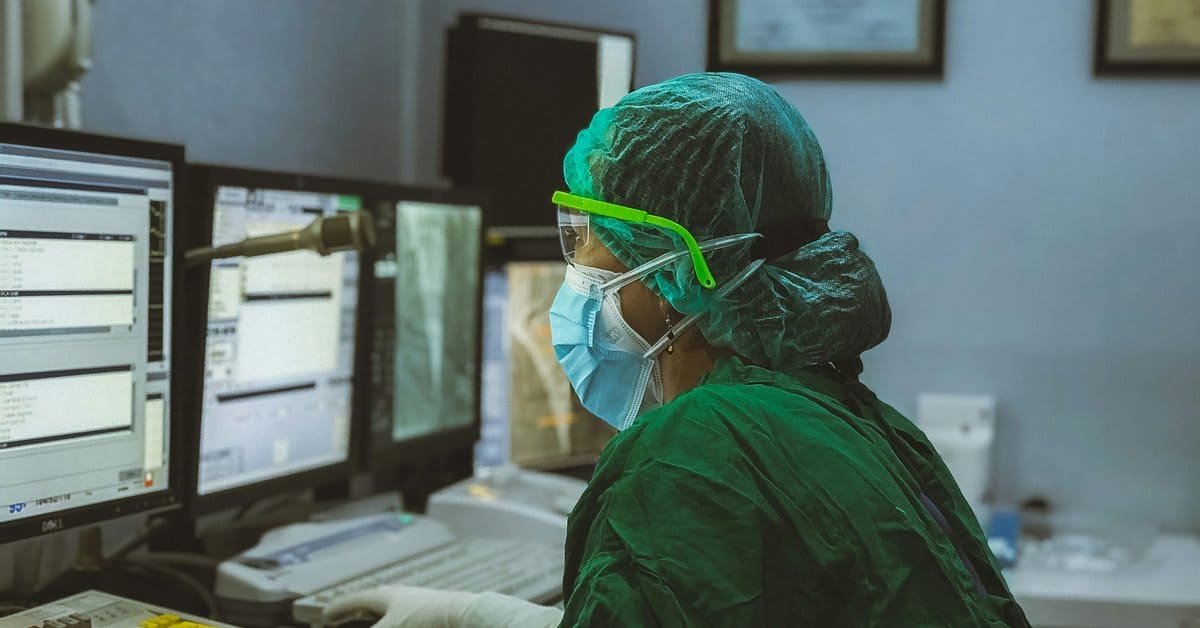
Medical office cabling in Dallas is one of the most demanding structured cabling scopes in the DFW commercial market. A medical office in Frisco, Allen, or Plano looks similar to a standard commercial office from the outside. Inside, the network infrastructure requirements are fundamentally different. Medical equipment, HIPAA rules, nurse call systems, and clinical Wi-Fi density all create cabling demands that standard commercial installations do not address.
Medical office cabling in Dallas is a distinct scope from standard commercial cabling. Treating them the same way produces infrastructure that fails compliance requirements and creates liability for the healthcare provider. Therefore, getting it right requires understanding what healthcare environments actually need from the physical layer before design decisions are made.
This article covers what Dallas-Fort Worth medical offices, clinics, and outpatient facilities need from their structured cabling infrastructure.
How Healthcare Cabling Differs From Standard Commercial Cabling
For example, a standard commercial office needs data drops for workstations and phones, Wi-Fi access points, IP cameras, and access control readers. Medical office cabling in Dallas covers all of that — plus a range of clinical systems that simply do not exist in a standard office.
EHR workstations, medical imaging systems, PACS servers, nurse call systems, patient monitoring equipment, and bedside terminals all connect through the structured cabling infrastructure. In a DFW outpatient surgery center or multi-specialty clinic, that device list can be two to three times longer than a comparable office floor.
Additionally, healthcare facilities operate under TIA-1179, the healthcare facility telecommunications infrastructure standard. Specifically, TIA-1179 builds on TIA-568 and adds requirements for patient care areas, equipment rooms, and clinical systems. Specifically, it addresses outlet density near patient care stations, pathway redundancy for life-safety systems, and the physical separation of clinical and admin networks.
Medical Office Cabling in Dallas: HIPAA Physical Security Requirements
The HIPAA Security Rule includes physical safeguards that directly affect how cabling is designed and installed in a healthcare facility. These are not optional. These requirements are not optional — they are federal legal obligations with financial penalties for violations.
Specifically, HIPAA’s physical safeguard requirements include limiting physical access to electronic information systems to authorized personnel only. In a medical office, therefore, every IDF and server room must be locked with logged access. An unlocked telecom room in a shared corridor is a direct HIPAA vulnerability. The same cabling contractor installing the structured cabling should integrate access control on those spaces — card readers, audit logs, and door alarms.
Additionally, network segmentation is a HIPAA requirement that affects cabling design. Clinical systems handling electronic protected health information (ePHI) must remain isolated from guest Wi-Fi, admin networks, and public internet access. In practice, the most reliable approach is physical network separation. That means dedicated cable runs, patch panels, and switch infrastructure for the clinical network only. This separation must be part of the cabling plan from the start. Adding it after the installation is complete requires pulling additional cable, which in an occupied medical facility is disruptive and expensive.
Access points in patient care areas must also be physically secured against tampering. Ceiling-mounted APs in clinical spaces should go in locations that limit unauthorized access. Cable runs serving them should use conduit in accessible ceiling areas.
Outlet Density in Patient Care Areas
One of the most common cabling failures in medical office build-outs is insufficient outlet density near patient care stations. TIA-1179 recommends at least four data outlets per patient care station in clinical areas. Standard commercial build-outs typically provide one or two outlets per workstation.
The reason is straightforward. In a clinical exam room, networked devices include the EHR workstation, a bedside terminal, a display, and a barcode scanner. Specifically, each of these devices needs a dedicated data drop. A single-outlet exam room forces clinical staff onto wireless connections for devices that should be wired. Extension cords and unmanaged switches create network instability and HIPAA exposure.
For DFW medical offices in Allen, Frisco, and McKinney, getting outlet density right during construction is far cheaper than adding drops later.
Clinical Wi-Fi: Higher Density Than a Standard Office
Healthcare facilities require higher Wi-Fi access point density than similar commercial office environments. The device-per-square-foot count in a clinical environment is significantly higher than in a standard office. Clinicians carry mobile workstations, tablets, and barcode scanners. Medical equipment increasingly uses Wi-Fi for data transmission. Visitors and patients use guest networks simultaneously.
For a DFW outpatient clinic, a well-designed Wi-Fi deployment typically requires one AP every 1,000 to 1,500 square feet in clinical areas. Standard corporate offices average one AP per 2,000 to 3,000 square feet. Additionally, clinical APs should be on dedicated, clinically managed networks, separate from the guest network that patients and visitors use.
Also, each AP requires a dedicated Cat6A cable run — not a shared drop. Furthermore, APs in patient care areas should be ceiling-mounted at a height that prevents tampering. Therefore, the AP placement plan must account for both clinical coverage requirements and the physical security expectations of the HIPAA rules.
Medical Imaging and PACS Infrastructure
In fact, medical imaging systems generate among the largest file sizes of any clinical application. A single CT scan produces images in the range of 50 to 200 megabytes. An MRI series can exceed 500 megabytes. PACS servers store, transmit, and retrieve these files continuously during clinical operations. For DFW imaging centers and radiology practices, the network infrastructure must handle this load without degradation.
Specifically, the cable runs serving imaging workstations, PACS servers, and imaging equipment should be dedicated Cat6A home runs — not shared with admin workstations or general office devices. The PACS server connections, in particular, often benefit from 10 Gbps switching infrastructure, which requires Cat6A throughout the pathway.
Medical imaging equipment also commonly generates significant EMI. MRI suites are the most extreme case, where the magnetic field requires non-ferrous cable pathway hardware and shielded cabling in adjacent spaces. For DFW outpatient imaging centers, coordinating the cabling specification with the imaging equipment vendor before rough-in is essential.
What to Require From a Dallas Medical Office Cabling Contractor
Not every commercial cabling contractor has healthcare experience. A contractor who does excellent commercial work may not understand TIA-1179, HIPAA physical security requirements, or clinical outlet density expectations.
When evaluating contractors for a DFW medical office cabling project, ask specifically whether the contractor has completed comparable healthcare or clinical cabling projects. Ask whether they understand HIPAA physical safeguard requirements as they apply to telecom room access and network segregation. Ask whether they are familiar with TIA-1179 and can design to its outlet density recommendations. Finally, ask whether they coordinate with medical equipment vendors and the IT team to ensure the cabling supports the specific clinical devices being installed.
Our team at Just Cabling has experience with structured cabling for medical offices and healthcare facilities across the DFW metroplex. We design to TIA-1179 standards, incorporate HIPAA physical security requirements into every telecom room buildout, and provide certified Fluke test documentation at closeout. Contact us for a free on-site assessment of your DFW medical facility before any work begins.
Just Cabling is a Dallas-based structured cabling company serving businesses across the DFW metroplex, including Plano, Frisco, McKinney, Allen, Las Colinas, Irving, and beyond. We specialize in commercial structured cabling, fiber optic installation, telecom room design and buildouts, and network infrastructure for offices, medical facilities, and corporate campuses.